A City of Los Angeles apartment building that sells for $5,400,000 and one that sells for $5,400,001 differ by one dollar of price. Their Measure ULA bills differ by about $216,000. Since July 1, 2026, ULA's 4% rate has applied to the entire sale price once a transaction goes above $5.4 million. That makes the threshold a cliff.
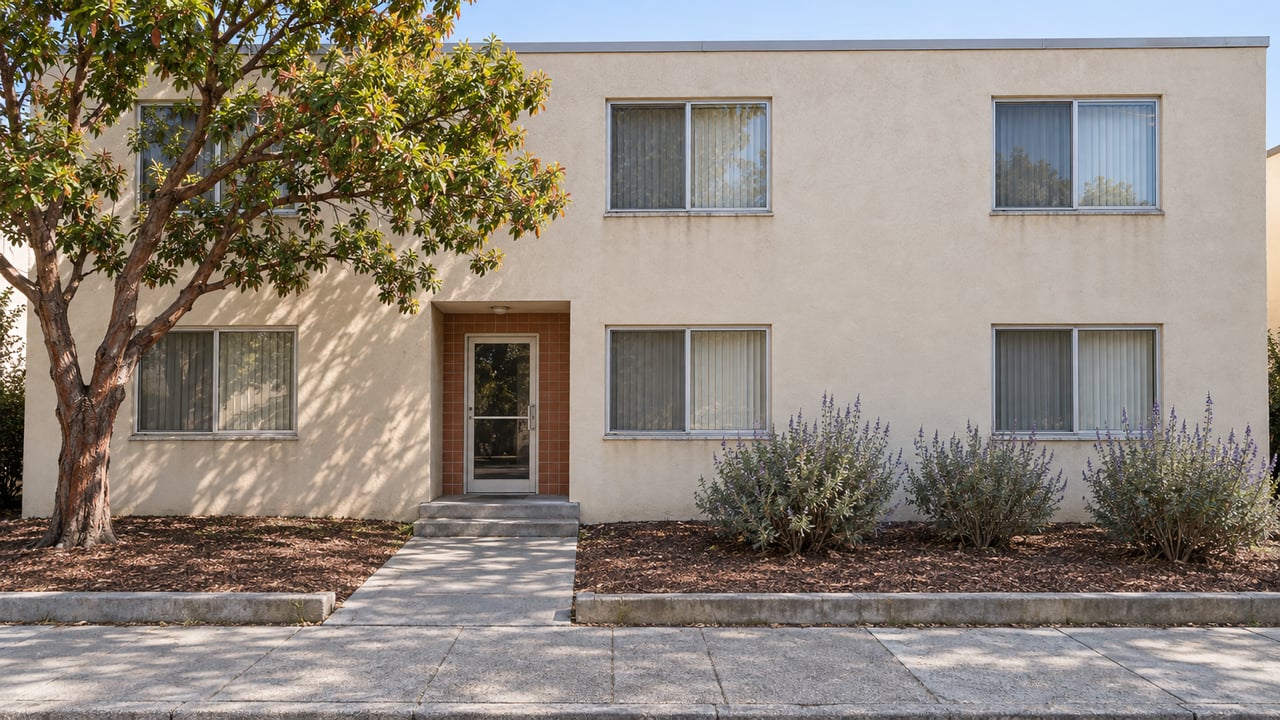
On the Westside, the cliff sits in an awkward place. A typical 9- to 12-unit building in Palms, Mar Vista, Sawtelle or West LA prices close to that line. A few blocks away in Culver City, a different tax design means the same building faces no cliff at all. For an owner planning an exit or a buyer underwriting one, the line can matter more than the cap rate.
The dollar that costs $216,000
The City of Los Angeles Office of Finance lists the ULA thresholds for transactions closing after June 30, 2026. Sales above $5,400,000 and below $10,900,000 pay 4%. Sales at $10,900,000 or more pay 5.5%. The Los Angeles County Recorder's transfer tax schedule shows the year before for comparison. From July 1, 2025, the lines were $5,300,000 and $10,600,000. Both moved up for July 2026.
ULA is charged on top of the City's base transfer tax of $2.25 per $500, which works out to 0.45%. The County adds its own $1.10 per $1,000 on top of that. Applied to a $6 million sale, those two rates come to $267,000 in City transfer taxes alone.
Two details make the cliff steeper than the headline rate suggests. First, the 4% applies to the whole price, not just the amount over $5.4 million. Second, the City calculates ULA on gross value, including any loan or lien that stays on the property at sale. A seller's existing debt does not shrink the amount the tax is charged on.
Culver City prices the same building on a ramp
Palms and Mar Vista border Culver City, and Culver City taxes sales differently. Under Measure RE, its tax applies to sales on or after April 1, 2021, at what the City calls marginal rates. Each rate applies only to the slice of the price within its bracket:
- 0.45% on amounts up to $1,499,999
- 1.5% from $1,500,000 to $2,999,999
- 3.0% from $3,000,000 to $9,999,999
- 4.0% on amounts of $10,000,000 and above
Because each rate applies only to its own slice, the tax rises a little at a time as price rises. It never jumps all at once. Run the same prices through both cities' posted schedules and the difference adds up quickly. County tax is left out because it is the same in both.
| Sale price | City of LA: 0.45% base plus ULA | Culver City: marginal brackets |
|---|---|---|
| $5,400,000 | about $24,300 | about $101,250 |
| $5,400,001 | about $240,300 | about $101,250 |
| $6,000,000 | $267,000 | about $119,250 |
| $9,000,000 | about $400,500 | about $209,250 |
| $11,000,000 | about $654,500 | about $279,250 |
Right up to the line, the City of LA building is the cheaper one to sell, by roughly $77,000. One dollar later, it costs about $139,000 more than its Culver City neighbor. Culver City's tax rises steadily with price. LA's sits low and then jumps.
Culver City says its bracket thresholds reset every five years based on the Consumer Price Index, while the rates stay the same. The brackets above are the ones the City currently posts, and its online calculator is the place to confirm the figure for a specific closing date. In Culver City, either the buyer or the seller may pay. If neither does, both are jointly liable to the City.
Where Westside buildings land relative to the line
A tax cliff matters most where many buildings price close to it. On the Westside, simple arithmetic puts the line squarely in small-building territory. At $450,000 a unit, $5.4 million buys 12 units. At $600,000 a unit, it buys nine. That is the size range many long-time owners hold.
One recent example shows how close these buildings sit. In July 2026, a 12-unit building near Century City was reported sold for $5.29 million, about $110,000 under today's threshold. The report described that price as well below 2021 and 2022 peak levels. Nothing in it says the price was set with ULA in mind. Still, it shows the problem. As per-unit values have come down, buildings that once cleared the line comfortably now trade near it.
Pricing has eased across the metro. In 3Q 2026, the average multifamily sale in Los Angeles was about $281,576 per unit, down 7.2% from a year earlier. The average cap rate was 5.9%, up 40 basis points. Those are citywide figures, and Westside buildings trade well above that per-unit average. The direction still matters. Falling values push more Westside buildings down toward the line.
Researchers have measured what buyers and sellers do near a cliff like this. In a July 2025 paper published through UCLA Anderson, Yingru Pan found that in 2022 and 2023, the $4.95 million to $5 million price range had 47% more transactions than the first price range above the original $5 million line. After the tax took effect, the $4 million to $5 million tier recorded three to five times as many monthly sales as the $5 million to $6 million tier.
Estimates of how much sales activity above the line has fallen differ by method:
- A UCLA Lewis Center report from April 2025 estimated that sales above the threshold fell 49% to 55% in ULA's first 20 months.
- RAND's May 28, 2026 report estimated that high-value sales fell 31% through early 2026. It also found that ULA raised $1.2 billion for affordable housing and tenant assistance.
- A Journal of Public Economics article dated August 2026 reported a decline of about 50% in high-value transactions.
The City has not accepted the most negative readings. In a May 2026 committee review reported by LAist, the chief legislative analyst said the City was not convinced ULA had an "extremely negative" impact on the general fund. For a seller, the debate over how big the effect is matters less than where it lands. The research agrees on the location, which is just above the threshold, where small Westside buildings tend to price.
The cliff stays in place through this cycle
Several efforts to change ULA ran out of time this year. CalMatters reported that the Howard Jarvis statewide initiative, which could have capped local transfer taxes, was withdrawn in June 2026. AB 736 would limit combined local transfer tax rates to 1.5% beginning January 1, 2027. Its last recorded action reads "In committee: Hearing postponed by committee" and is dated June 25, 2026.
At City Hall, LAist reported that the City Council voted 14-0 on July 1 to shelve a proposed ballot measure exempting new apartment buildings. That came after a committee set aside a proposal in May to lower the multifamily rate. The only ULA item on the November ballot is Proposition TE. It covers residential properties damaged or destroyed in the Palisades Fire and is not a general multifamily change.
The rent side matters too, because rent growth is what would let an owner grow into a price above the line. For City of LA buildings covered by the Rent Stabilization Ordinance, LAHD lists the annual allowable increase at 3% from July 1, 2025 through June 30, 2027. Under the amended formula, future increases range from 1% to 4%. LAHD also says annual increases will no longer include a separate percentage for utilities, though its page notes that this change was pending final Council approval. For a building priced just under $5.4 million, income gains are capped and slow. A higher sale price brings an immediate tax jump.
Underwriting with the line in view
For Westside owners and buyers, the threshold changes the questions to ask:
- Where does the price sit? Above the line, a City of LA seller needs a price roughly $216,000 higher just to net the same amount before other costs. Prices modestly above the line often leave the seller worse off than a price at the line would.
- Which jurisdiction is the property in? A building on the Culver City side of the boundary uses marginal brackets. Comparing sales across that boundary on per-unit price alone leaves out a difference of six figures.
- How much debt stays with the property? ULA is calculated on gross value, including any loan or lien that stays on the property at sale, so leaving debt in place does not reduce the ULA owed.
- When will it close? The City of LA thresholds moved from $5.3 million to $5.4 million on July 1, 2026. The closing date determines which line applies.
All of this is general information, not legal, tax or financial advice. Owners should confirm how these rules apply to their own transaction with a qualified tax advisor or attorney.
FAQ
Does ULA apply only to the amount above $5.4 million? No. According to the Los Angeles County Recorder's transfer tax schedule, once a City of LA sale goes above $5.4 million, the 4% rate applies to the entire transaction value.
Does Culver City have a similar cliff? No. Culver City describes its rates as marginal. Each rate applies only to the portion of the price within its bracket.
Is a change to ULA on the November 2026 ballot? Only Proposition TE, which is limited to qualifying properties affected by the Palisades Fire. The broader multifamily proposals were shelved before the deadline.
If you own a Westside building that prices near the $5.4 million line, the decision on list price, timing and structure is usually where the most money is won or lost. Evans Investment Group can run your building's net proceeds on both sides of the threshold before you set a price. Contact Us to start that conversation.