Are you weighing Sun Valley against North Hollywood for your next small multifamily purchase? If so, you are really comparing two very different investment stories inside the same broader Los Angeles market. One tends to reward disciplined operations and lower-basis buying, while the other often offers stronger renter depth, transit access, and resale liquidity. Let’s break down how each submarket may fit your strategy.
Why This Comparison Matters
Sun Valley and North Hollywood can sound similar on a map, but their housing patterns, renter base, and building inventory look very different when you use Los Angeles City Planning community plan geographies. North Hollywood–Valley Village includes Valley Village and a significant industrial core, while Sun Valley–La Tuna Canyon includes Sun Valley, La Tuna Canyon, and Stonehurst.
That distinction matters because investors are not just buying a building. You are also buying into a density profile, a renter mix, a product type, and a likely exit pool. For small multifamily investors, those factors can shape both day-to-day operations and long-term returns.
Sun Valley at a Glance
Sun Valley reads as a more industrial-adjacent, lower-density submarket. City Planning notes that industrial land preservation remains part of the community plan framework, and city materials highlight access to the I-5, Hollywood Burbank Airport, and the Sun Valley Metrolink Station.
The area had 86,081 residents in the 2020-2024 ACS profile, with 4,418 people per square mile. Housing tenure is relatively balanced, with 51.2% owner-occupied housing and 48.8% renter-occupied housing.
From an investor perspective, that tends to point to a steadier, less urban renter profile than North Hollywood. It also supports the idea that Sun Valley is often better suited to buyers focused on operations, capex planning, and basis discipline.
North Hollywood at a Glance
North Hollywood reads as a denser, more renter-oriented submarket. City Planning describes a mix that includes the NoHo Arts District, multifamily and commercial corridors, and a significant industrial core.
The area had 136,955 residents, with 12,462 people per square mile. It is much more renter-heavy than Sun Valley, with 74.5% renter-occupied housing and 25.5% owner-occupied housing.
Transit is also a major differentiator. The North Hollywood station area is served by the Metro B and G Lines, Metrolink, and local bus service, which supports demand from renters who value commute access and convenience.
Renter Profile and Demand Drivers
Sun Valley renter profile
Sun Valley’s household profile leans larger and more family-oriented. Average household size is 3.49, and 37.5% of households include at least one person under 18.
Median household income is $78,530. Spanish is spoken at home in 54.1% of households, which reinforces that owners should understand the local resident base and communicate clearly with the community they serve.
For investors, this can translate into demand for practical unit layouts and stable day-to-day management. The appeal may come less from trend-driven location premiums and more from functional housing in an accessible part of the Valley.
North Hollywood renter profile
North Hollywood’s renter base looks different. Average household size is 2.32, and only 21.2% of households include someone under 18.
Median household income is $75,378, which is close to Sun Valley, but the lifestyle pattern is not the same. With denser housing, strong transit links, and the NoHo Arts District, North Hollywood tends to attract smaller households seeking access, convenience, and a more urban environment.
That broader renter pool can matter when you are underwriting vacancy, tenant turnover, and future resale appeal. In a submarket with more renter concentration, location inside the neighborhood can carry more weight.
Housing Stock Tells a Big Story
Sun Valley housing stock
Sun Valley has a more spread-out and lower-rise housing profile. About 59.8% of units are single-housing units, while 38.9% are multiple-housing units.
Much of the stock is older. The largest vintage cohort is the 1950s at 26.6%, followed by the 1960s at 17.6% and the 1970s at 15.3%.
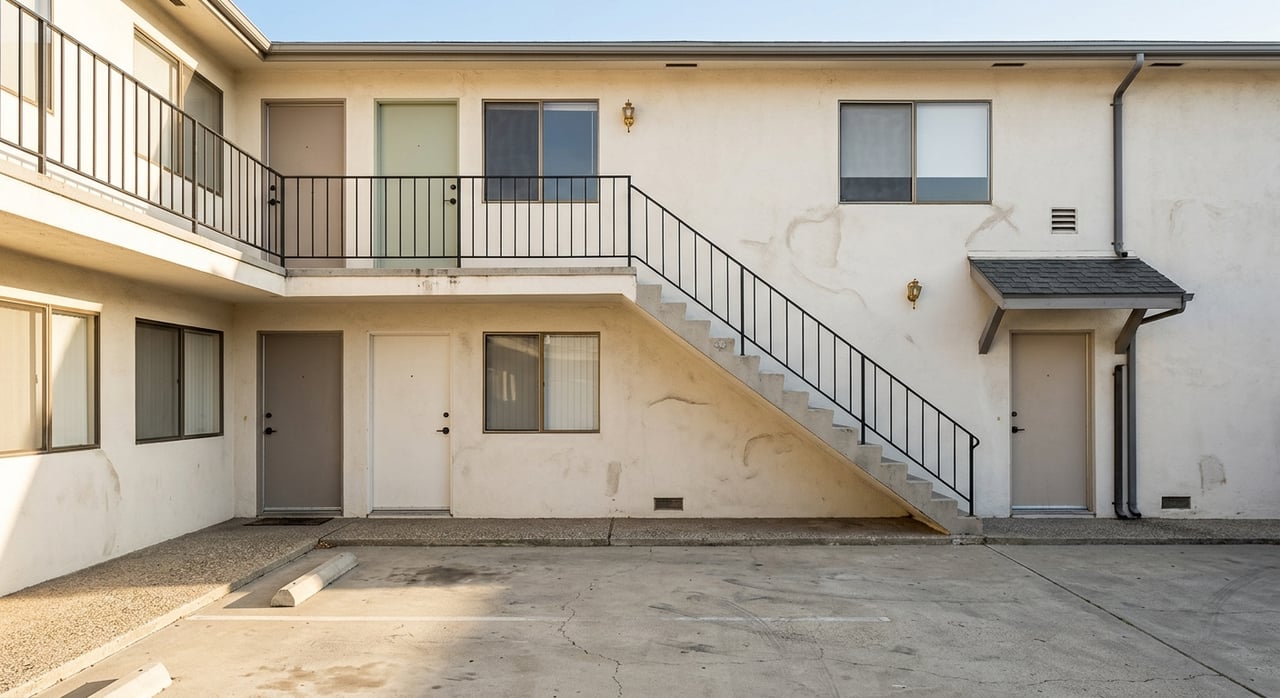
For small multifamily buyers, this usually means straightforward low-rise assets with older systems and more hands-on ownership needs. You may find opportunity in that simplicity, but only if you underwrite repairs, reserves, and unit turns carefully.
North Hollywood housing stock
North Hollywood is much more multifamily-heavy. About 73.2% of units are multiple-housing units, compared with 26.4% single-housing units.
That alone tells you a lot about the local investment environment. You are operating in a market where multifamily is a core part of the housing stock, not a smaller slice of it.
It also helps explain why North Hollywood can support a wider variety of apartment product. Investors can encounter classic vintage walk-ups, renovated smaller properties, and newer townhome-style or loft-style communities in the same broader submarket.
Pricing Signals and Active Inventory
Current public listings suggest deeper active inventory in North Hollywood than in Sun Valley. LoopNet shows 64 apartment-building listings in North Hollywood versus 10 in Sun Valley 91352, which is not a full market census but does suggest a broader public buyer and seller market in North Hollywood.
Sun Valley pricing pattern
Sun Valley’s current asking inventory skews toward older, low-rise product. Representative listings include a 12-unit 1953 building at $1.9 million, or about $158,333 per unit, a 14-unit property at $2.39 million, or about $170,714 per unit, and an 18-unit 1957 asset at $3.07 million, or about $170,556 per unit.
Other examples include a 28-unit 1957 courtyard-style property at $4.775 million, or about $170,536 per unit, and a more renovated 5-unit property at $1.495 million, or about $299,000 per unit. Based on those examples, a meaningful portion of Sun Valley inventory appears to trade in the mid-$100,000s to low-$200,000s per unit, with renovated properties reaching higher levels.
That lower basis can be attractive if your strategy centers on value-add execution. In many cases, the investment case is less about paying for a premium location and more about improving operations and controlling capital work.
North Hollywood pricing pattern
North Hollywood shows a much wider spread in asking prices. Examples include a renovated fourplex at $1.285 million, or about $321,250 per unit, a fourplex at $1.999 million, or about $499,750 per unit, an 8-unit vintage building at $1.475 million, or about $184,375 per unit, and a 10-unit property at $1.55 million, or about $155,000 per unit.
The submarket also includes larger examples, such as a 41-unit asset at about $155,827 per unit and a 20-unit Valley Village or NoHo asset around $272,500 per unit. Newer or townhome-style product can exceed $570,000 per unit.
That range matters because North Hollywood can behave like two markets at once. Older stock may underwrite like a classic Valley value-add deal, while newer or highly renovated assets can command a much higher basis tied to location and product quality.
Strategy Fit for Small Investors
When Sun Valley may make more sense
Sun Valley may be a better fit if you are focused on lower entry basis and operational upside. Current listings often call out roof work, windows, electrical upgrades, and balcony or walkway retrofits, which suggests deferred maintenance is a real underwriting issue.
That does not make Sun Valley less attractive. It simply means your returns may depend more on execution than on a location premium.
If you are comfortable with capex planning, rent management, and hands-on asset oversight, Sun Valley can align with a practical value-add approach. For some buyers, that can be the cleaner path to improving performance over time.
When North Hollywood may make more sense
North Hollywood may be a stronger fit if you value renter depth, transit connectivity, and broader exit liquidity. The B and G Lines, Metrolink access, and destinations like the NoHo Arts District and Lankershim Arts Center support a broader renter base and stronger visibility among buyers.
That can be especially relevant if you are thinking beyond current yield. A well-located North Hollywood asset may offer a stronger resale story in the next cycle because more investors understand the area and actively track it.
For some buyers, paying a higher basis can make sense if the tradeoff is better location quality and a deeper future buyer pool. The key is being honest about whether your goals are yield-driven, appreciation-driven, or a blend of both.
Rent Control and Vintage Stock
Regulatory diligence matters in both submarkets. According to the Los Angeles Housing Department, units built on or before October 1, 1978 may be subject to the City of Los Angeles Rent Stabilization Ordinance.
That is especially important here because much of the apartment inventory in both areas is older. If you are looking at vintage buildings, rent-control assumptions should be built into your underwriting from the start.
This is one of the biggest places small investors can get into trouble. A deal that looks attractive on paper can change quickly if projected rent growth does not match local rules or the building’s actual status.
Broader Los Angeles Market Context
The wider multifamily market also supports a measured, strategy-first approach. CBRE reported 95.6% occupancy for Los Angeles multifamily in Q3 2025, while Marcus & Millichap forecast about 6,200 Los Angeles deliveries in 2026, the lowest since 2015.
That combination suggests continued resilience for well-located multifamily properties. At the same time, it reinforces that returns are still highly submarket-specific.
In other words, there is no universal winner between Sun Valley and North Hollywood. The better pick depends on whether you are trying to maximize basis efficiency and operational upside, or prioritize renter depth, location appeal, and resale liquidity.
Bottom Line for Investors
If you want the simplest framework, think of Sun Valley as lower basis, industrial-adjacent, family-leaning, and operations-heavy. Think of North Hollywood as denser, transit-linked, arts-oriented, and more liquid on exit.
Neither approach is automatically better. The right choice depends on your capital, your management style, your hold period, and how much execution risk you want to take on.
If you are evaluating a 4-unit, 8-unit, or 20-unit deal in either submarket, the smartest next step is not guessing. It is underwriting the property in the context of the neighborhood, the building’s vintage, and your actual investment goals. If you want help comparing opportunities, pricing a property, or planning your next acquisition or 1031 exchange, connect with Evans Investment Group.
FAQs
Is Sun Valley or North Hollywood better for first-time small multifamily investors?
- Sun Valley may appeal to buyers seeking a lower basis and value-add opportunity, while North Hollywood may appeal to buyers who want stronger renter depth, transit access, and broader resale liquidity.
What is the main investment difference between Sun Valley and North Hollywood apartment buildings?
- Sun Valley often fits an operations-driven strategy with older low-rise assets, while North Hollywood more often supports a location-driven strategy with a larger renter base and wider pricing range.
Are Sun Valley and North Hollywood both renter markets for apartment investors?
- Yes, but North Hollywood is much more renter-heavy at 74.5% renter-occupied housing, compared with 48.8% renter-occupied housing in Sun Valley–La Tuna Canyon.
Do older apartment buildings in Sun Valley and North Hollywood require extra underwriting care?
- Yes. Much of the stock in both areas is older, so buyers should pay close attention to capital needs, building systems, and whether the property may be subject to the Los Angeles Rent Stabilization Ordinance.
Does North Hollywood usually have more apartment inventory for sale than Sun Valley?
- Based on current public listing counts cited in the research, North Hollywood shows a deeper active inventory than Sun Valley, which can indicate a broader buyer and seller market.
What kind of investor strategy usually fits Sun Valley multifamily best?
- Sun Valley often fits investors who are comfortable with deferred maintenance planning, unit turns, rent management, and improving performance through disciplined operations.
What kind of investor strategy usually fits North Hollywood multifamily best?
- North Hollywood often fits investors who want exposure to transit-linked demand, a broader renter pool, and potentially stronger liquidity when it is time to sell.