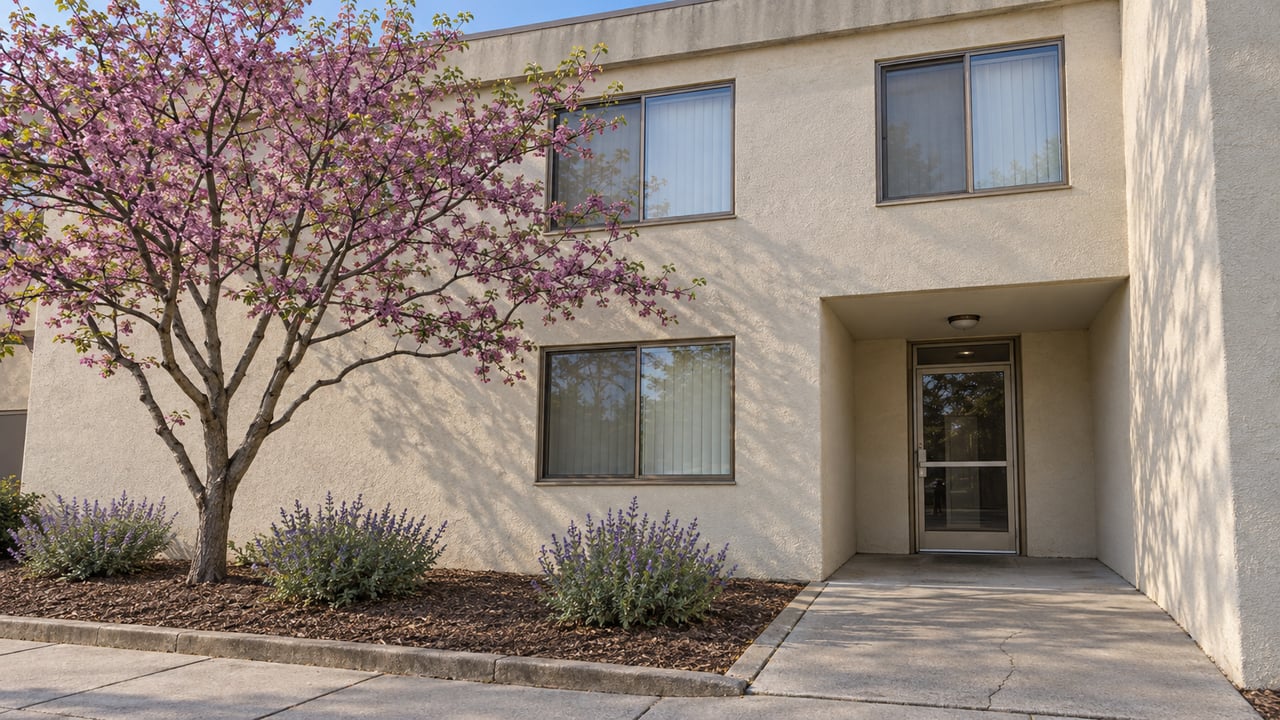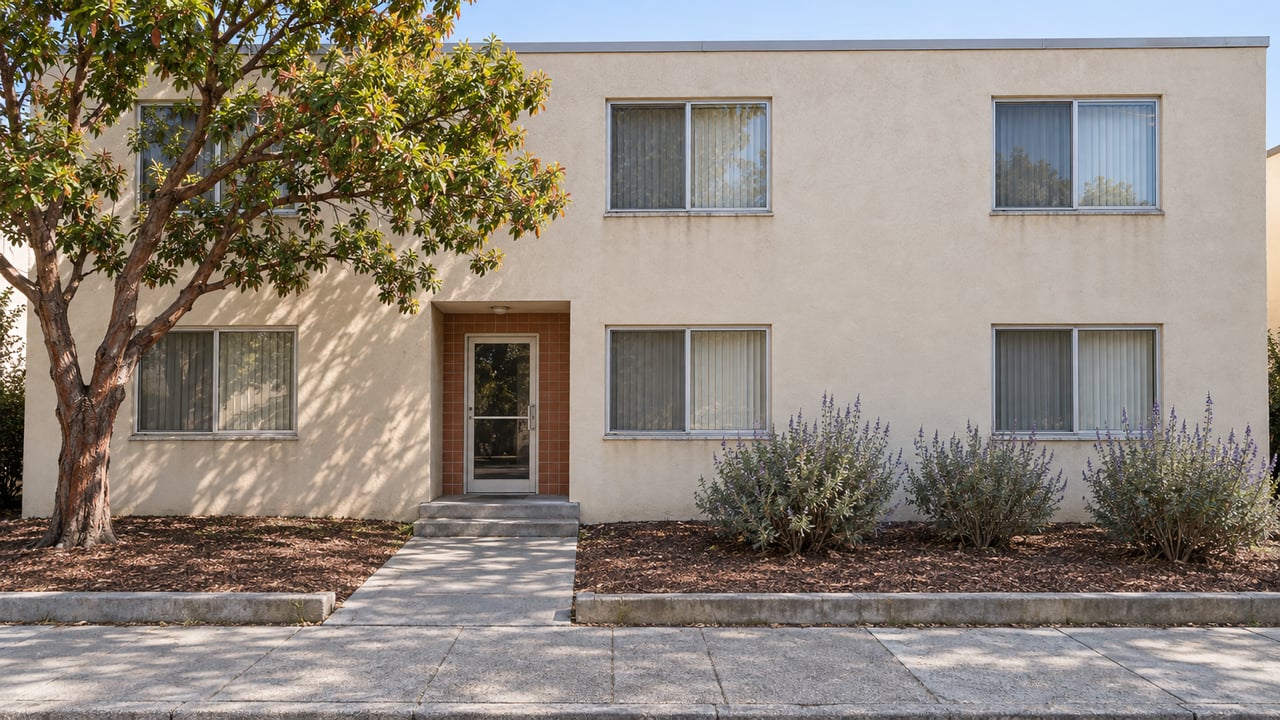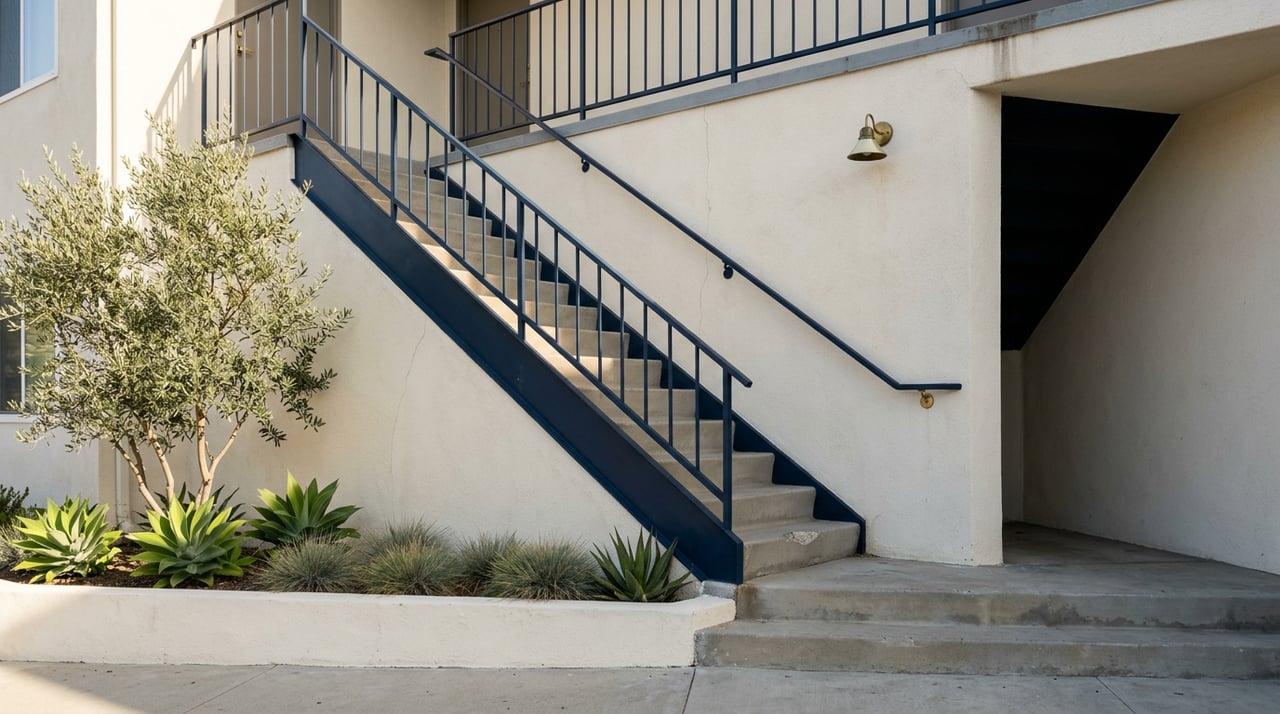
The pitch writes itself. A 1970s 8-unit walk-up in Van Nuys trades at roughly $120,000 to $210,000 per unit in the workforce-housing band, cap rates print in the high fives, and asking rent still sits under $2,000. Compared to a Westside deal, the math looks generous before you have even opened the rent roll.
That is the surface. Underneath, the submarket is being repriced by a supply wave and a regulatory split that most out-of-area buyers are not pricing in.
The Van Nuys assets most likely to end up in a 1031 buyer's crosshairs are the same 1960s and 1970s RSO walk-ups that will feel the concessions from Sepulveda-corridor lease-ups first.
That is the thesis. What follows is the evidence.
The number that looks like a deal
Start with what the aggregators show. Matthews' Q3 2025 read of Van Nuys put average asking rent at roughly $1,834 per unit, one of the more affordable rents across the Los Angeles metro, with vacancy at 4.7% versus a 5.3% Los Angeles rate. First-half 2026 sales activity supported a 5.6% average cap-rate read and a 10x to 12x GRM range. On a metro-wide basis, Northmarq reported per-unit prices in the San Fernando Valley rose 4% to $318,200, with the area making up roughly one-third of regional sales in 2025 and several transactions closing between $125 and $185 million.
Two things get lost when those figures travel to a broker email. The first is that Van Nuys recorded rental rate losses of -0.4% over the past 12 months, leaving Q3 asking rent at $1,834. The second is that Matthews' own comparison of RSO versus AB 1482 stock through 2025 shows cap rates have expanded more than a full percentage point since 2023, GRMs have compressed accordingly, and RSO product has seen continued price softening as rising rates and operating cost pressures eat into investor appetite.
A cap rate that has moved 100 basis points on soft rents is not a "cheap basis." It is a repricing in progress. The question is what keeps that repricing going.
The pipeline that changes the exit math
Van Nuys is not absorbing a diffuse trickle of new supply. It is absorbing a concentrated one, and the concentration is geographic. Matthews' Q3 2025 report put it plainly: with 633 units on the way, Van Nuys records the greatest construction increase among the San Fernando Valley submarkets, besides Woodland Hills and North Hollywood/Studio City. The anchor project, Uncommon Sepulveda, is the largest property under construction in Van Nuys at 6728 Sepulveda Blvd., set to deliver 405 units.
A short map of what is actually being built and by whom:
| Project | Address | Units | Developer / Notes |
|---|---|---|---|
| Uncommon Sepulveda | 6728 Sepulveda Blvd. | 405 | Uncommon Developers, Works Progress Architecture; TOC incentives with 41 units set aside as deed-restricted affordable at extremely low income |
| VOSE | Van Nuys Blvd. corridor | 332 | Alliant Communities, $160M build, $117.2M CalHFA bond proceeds, six-story, Q2 2026 delivery, mix of studio, one-, and two-bedroom units |
| Vista Terrace | 8130-8146 N. Van Nuys Blvd. | 102 | Thomas Safran & Associates, four-story over a 55-car garage, restricted to renters earning between 30 and 70 percent of AMI |
| 14550 Delano St. (proposed) | 14550 Delano St. | 223 | Seven-story senior building; 178 units for low-income residents and 45 shared-housing units for moderate-income seniors |
| 6100 Hazeltine Ave. (proposed) | 6100 Hazeltine Ave. | 72 | ETZ Development, seven-story, no on-site parking, adjacent to the G Line busway, filed under Executive Directive 1 |
| 14715 W. Burbank Blvd. (proposed) | 14715 W. Burbank Blvd. | 91 | Six-story senior affordable building filed by Burbank Villa Apartments, LLC under Executive Directive 1 |
The through-line is not just unit count. It is transit alignment. Uncommon Sepulveda, VOSE, Vista Terrace, and the Hazeltine and Delano projects all sit on or near Van Nuys Boulevard and the future East San Fernando Valley Light Rail line. Alliant framed VOSE's location as offering easy access to multiple stops along the future East San Fernando Valley Light Rail line. Urbanize LA has noted that transit investments in the Van Nuys corridor, including the East San Fernando Valley rail project and upgrades to the G Line, are helping drive fresh interest from developers along this stretch.
For a small-multifamily owner three blocks off Van Nuys Boulevard, the practical reading is straightforward. The submarket-wide vacancy figure is going to be tested in 2026 and 2027 by lease-ups that all cluster within the same one-and-a-half-mile corridor. Concessions on those buildings will set the top of the local rent ladder for the two years that matter most to any 5-to-10 year hold underwritten today.
Why the RSO stock feels it first
There are two rent-control regimes on the same city block. Los Angeles' RSO applies to properties built before October 1, 1978 and imposes stricter rent increase limits, along with enhanced tenant protections. AB 1482 governs newer properties, typically those built after 1980, and allows modest annual rent increases tied to inflation, subject to statewide caps.
A 1968 12-unit off Vanowen and a 1988 12-unit off Kester look identical on a Crexi thumbnail. They do not underwrite identically. On the RSO building, the rent-to-market gap is the entire investment thesis, and the ability to close that gap depends on tenant turnover during exactly the years the new corridor product will be offering two months free and $500 lookalike incentives. On the AB 1482 building, the annual escalator does the work automatically, and the exit buyer knows it.
Matthews reads it the same way, describing continued price softening in RSO product as rising rates and operating cost pressures eat into investor appetite. Northmarq's 2026 outlook expects that the pace of sales for older, lower-tier properties will gain momentum as clearer opportunities for long-term income and value appreciation emerge, with these patterns more pronounced in the Downtown and San Fernando Valley areas, and cap rates may continue to rise in 2026 due to a greater share of lower-tier properties changing hands.
Translate that: more Van Nuys RSO product is going to trade, and the average print will look worse before it looks better. That is not a reason to sit out. It is a reason to underwrite differently than you would have in 2022.
What to adjust in your underwriting
Four adjustments that follow from the evidence above, in order of how much they move the model:
- Model trailing, not projected, rent growth for 2026. Matthews had Van Nuys at -0.4% over the past 12 months. Backing a 3% grower into year one because the pro forma spreadsheet defaults to it is where deals go quiet 18 months in.
- Stress-test loss-to-lease against corridor lease-ups. If the property sits within a mile of Van Nuys Boulevard or Sepulveda Boulevard, the buildings resetting the top of your local ladder in 2026 and 2027 are the six projects in the table above. Concessions there compress renewal leverage on your Class C rent roll, whatever the AGA allows.
- Split RSO and AB 1482 comparables when you build your cap-rate view. The Van Nuys "average" cap is a blend of two regimes trading at different multiples. A 1971 building priced off a 1993 building's comp is mispriced by construction.
- Underwrite the exit against a rising, not stable, cap. Northmarq's own forecast points to cap rates continuing to rise in 2026 due to a greater share of lower-tier properties changing hands. A 25 to 50 basis point expansion at exit is a sober assumption, not a bearish one.
For a 1031 investor working under a 45-day identification clock, the practical version of this is simpler: the Van Nuys buildings that price cleanest are the AB 1482 assets under 40 years old, not the older RSO product with the widest rent-to-market gap. The gap deals still work, but they work as multi-year value-add stories underwritten by an operator with local turnover experience, not as coupon-clipping replacement properties.
FAQ
Is Van Nuys still an entry point for a first apartment building purchase? The $120,000 to $210,000 per unit workforce band is real, and the loan sizing is achievable for buyers priced out of the Westside. The submarket rewards operators who can execute unit turns and manage older mechanical systems. It punishes passive underwriting.
Does the incoming supply hurt smaller 4-to-20 unit buildings the same way it hurts a 100-unit comp? Not identically. New corridor product competes hardest for the same renter who would otherwise take a renovated one-bedroom in a 1970s walk-up on Kester or Woodman. The overlap is real for turned units in RSO stock. Classic-condition units at deeper discounts see less direct pressure.
How much of the pipeline is affordable versus market-rate? A large share. VOSE, Vista Terrace, 6100 Hazeltine, 14715 Burbank, and the 14550 Delano proposal are entirely or almost entirely income-restricted. Uncommon Sepulveda is market-rate with 41 units set aside as deed-restricted affordable at the extremely low-income level. The affordable projects still absorb renters who would otherwise sit in your Class C stock at the bottom of the ladder.
When is the earliest new supply pressure shows up in rent comps? VOSE is set to be completed in the second quarter of 2026, and Uncommon Sepulveda's 405 units are targeting a 2027 delivery. Lease-up concessions typically land in comps within one to two quarters of certificate of occupancy.
If you own a Van Nuys apartment building and want a candid read on where your rent roll sits against the incoming corridor supply, or you are underwriting a replacement property inside a 1031 timeline, Evans Investment Group works with owners and buyers on exactly these questions across Los Angeles and Ventura County. Contact Us to start the conversation.