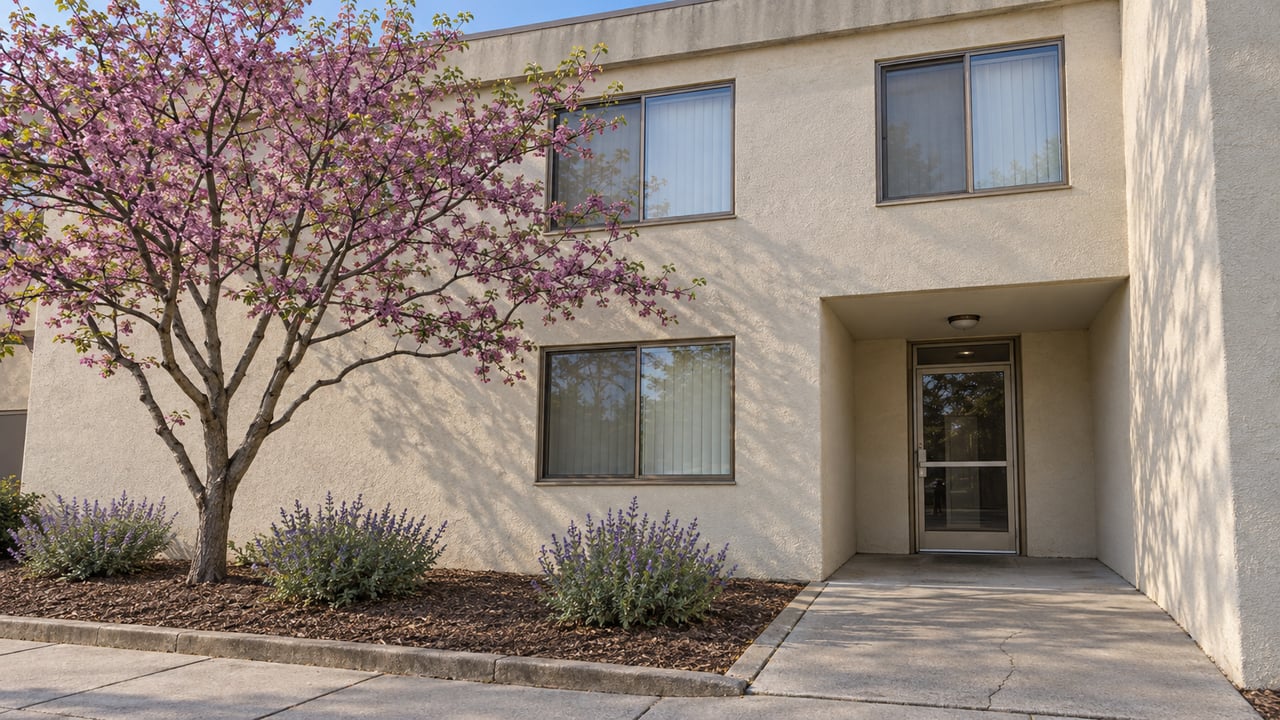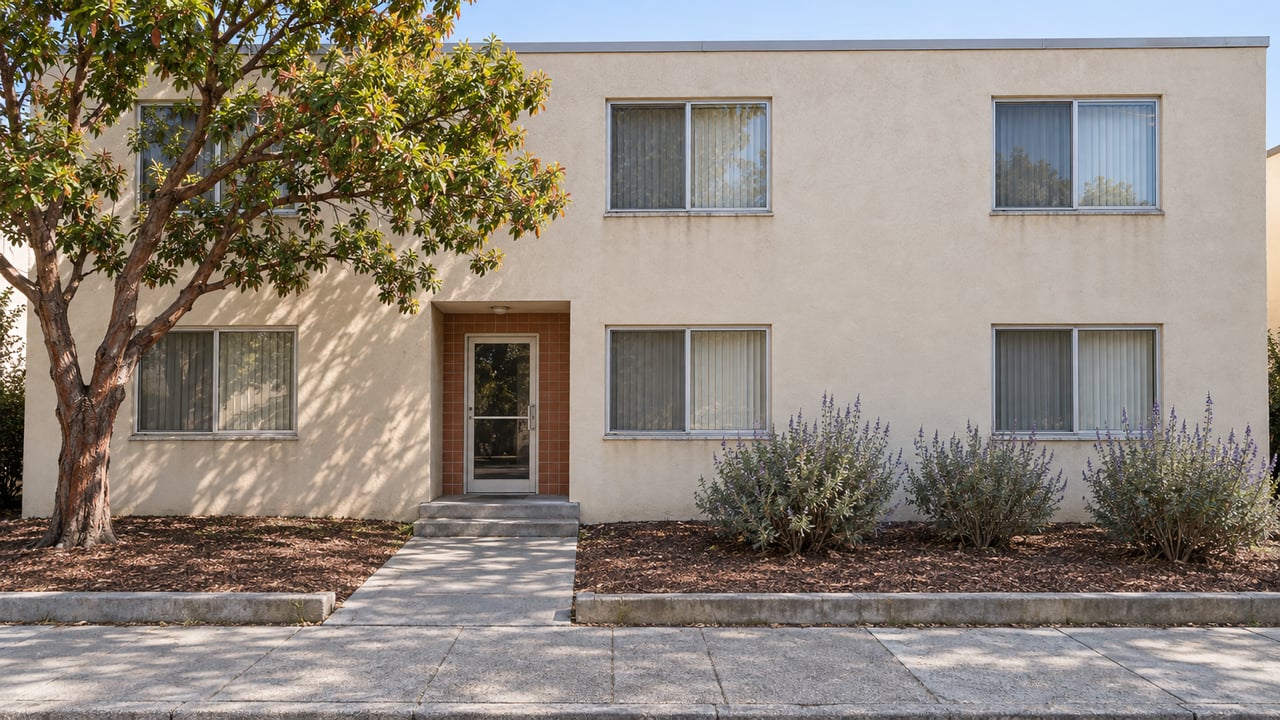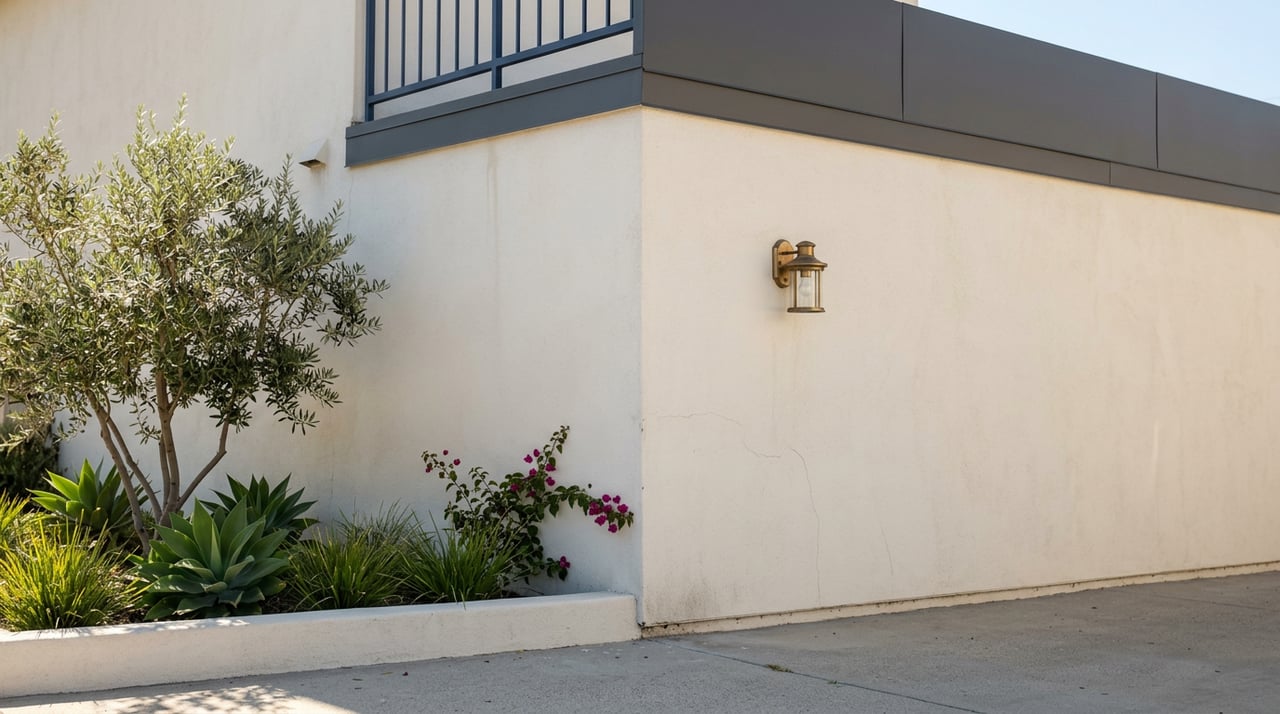
Two apartment buildings, one block apart. One sits on Fountain Avenue inside West Hollywood. The other sits on Fountain Avenue inside the City of Los Angeles. Same vintage, same unit count, same in-place rents. On paper they underwrite the same way. On a real transaction they do not, and the gap is wider in 2026 than most owners assume.
The instinct is to treat West Hollywood as a stricter version of Los Angeles rent control. That framing costs sellers money at exit and costs buyers accuracy at acquisition. The correct framing is that West Hollywood operates under an entirely separate regulatory and tax regime, and the differences compound in ways that only surface during due diligence.
The friction that shows up first: your MAR baseline is probably wrong
Before cap rates, before pro forma rent growth, before Measure ULA math, there is a piece of paperwork that decides whether an owner can lawfully raise rent at all. West Hollywood requires every covered unit to be registered annually with the Rent Stabilization Division, at a fee of $234 per unit for the 2025-26 year, half of which is a once-yearly tenant pass-through under WHMC § 17.32. Miss a registration and the AGA increase cannot be lawfully collected until the registration is cured, and cure does not reach backward. A skipped year is a permanent revenue loss on that unit.
The bigger issue is the Maximum Allowable Rent baseline itself. On a 14-unit pre-1979 building traded once or twice in the last two decades, inherited MARs across units are frequently inconsistent with one another and with what the current owner believes to be the legal ceiling. Attorneys who work these files describe MAR baseline confusion as the second-most-costly owner error in the city, behind only defective just-cause notices. Rebaselining requires a petition and hearing with the Rent Stabilization Division, which is a real timeline, not a closing-week fix.
For a buyer, the practical read is this: if the offering memorandum quotes an in-place rent that assumes an AGA history the seller cannot document with registration records, that number is a projection, not a fact. Underwrite from registered MARs, not from what the current owner is charging.
The 2026 AGA, and why the "stricter" label misleads
The Annual General Adjustment effective September 1, 2026 through August 31, 2027 is 2.75%, up from 2.25% the prior year. The formula is 75% of the year-over-year change in the LA-area Consumer Price Index measured each May, rounded to the nearest quarter percent. May-over-May CPI came in at 3.593%, which produced 2.695%, which rounds to 2.75%. A permanent 3% ceiling, written into the ordinance in 2022, sits above the formula.
Compared to the City of LA's flat 3% under LARSO, the WeHo cap looks slightly more restrictive. In practice, on a stabilized rent roll, the difference between 2.75% and 3% works out to roughly one-quarter of one percent of gross scheduled income per year. That is a rounding error next to what the ULA exemption does at the point of sale.
The exemption that quietly reprices the exit
Measure ULA, the City of Los Angeles transfer tax passed in 2022, imposes a 4.0% surcharge on real estate transfers above roughly $5.4 million and 5.5% above roughly $10.8 million. It does not apply within the boundaries of the City of West Hollywood.
That fact does most of the work in explaining why WeHo trades where it trades. A worked example:
| Sale price | ULA cost inside City of LA | ULA cost inside West Hollywood | Difference to the seller |
|---|---|---|---|
| $6,000,000 | $240,000 | $0 | $240,000 |
| $9,500,000 | $380,000 | $0 | $380,000 |
| $12,000,000 | $660,000 | $0 | $660,000 |
Those are real dollars the seller keeps. On a Fountain Avenue comparable at $6M, the WeHo owner nets four percentage points more of gross proceeds than the LA-side owner. Cap the AGA advantage of LARSO's 3% over WeHo's 2.75% and it would take roughly forty years of rent increases to close the gap on a single transaction.
For 1031 sellers, this changes replacement math. The WeHo seller has more equity to redeploy, which shifts the calculus toward smaller in-count, higher-quality replacement targets rather than the volume-oriented trades that dominate exchange flow out of South LA and the East Valley.
What the metro numbers look like right now
LA metro multifamily traded at a 5.1% cap rate in Q1 2026 on $1.4B of quarterly volume, with average pricing at roughly $350,000 per unit, per Matthews Real Estate Investment Services citing CoStar. Cap rates expanded approximately 60 basis points over the prior year, and Matthews described that expansion as largely complete, with a meaningful recovery in values expected to be gradual and prior peak pricing unlikely to return until 2029 or later.
Within that metro backdrop, submarkets diverge sharply:
- Prime Westside, meaning Beverly Hills, Santa Monica, Brentwood, is trading at roughly 4.7% to 5.5%.
- Hollywood, Koreatown, Northeast LA sit at 5.0% to 6.5%.
- South LA and DTLA range from 5.5% to 7.5% and higher.
Matthews' most recent West Hollywood and Hollywood submarket read placed the 12-month sales volume at $329 million with a submarket cap rate near 5.2% and roughly 630 new units delivered in the trailing year. Metro-wide vacancy is 5.6% and asking rents are flat at roughly $2,292 per unit, with the 2026 delivery pipeline down to approximately 6,200 units, the lowest since 2015.
The interpretation Evans watches for: metro rent growth is running at 0%, entertainment industry employment is down roughly 40,000 jobs over three years per Marcus & Millichap's 2026 forecast, and both those headwinds concentrate in the exact submarkets a WeHo owner competes with for exchange dollars. That is a case for selling well-documented WeHo assets into the current buyer pool rather than waiting for organic rent growth to lift NOI.
The rent-to-market gap is the real underwriting variable
WeHo's supply is fixed. The city is 1.9 square miles, effectively built out, with organized tenant advocacy that limits demolition and redevelopment. Demand is not the question. The question is what a buyer will pay for income streams that have been suppressed by decades of RSO-limited increases against a market rent that has moved much faster.
On long-tenured pre-1979 buildings, the gap between in-place rent and market rent commonly runs 20% to 45%. That gap does two things at once:
- It compresses in-place GRMs materially below what current-market rents would imply, which is why WeHo trades tighter than a naive rent multiple suggests.
- It creates an option value on vacancy. Under state law, when a covered unit turns over voluntarily, the owner can reset to market before the new tenancy comes back under MAR discipline.
A WeHo building's cap rate is not just a market number. It is a function of the rent roll, the age of the tenancies, and the buyer's view on turnover probability over the hold period.
Two identical buildings with identical current rents can trade 50 basis points apart on cap if one has an average tenancy of 4 years and the other has an average tenancy of 22 years. The longer-tenured building carries more embedded upside and more no-fault relocation risk, which as of the July 1, 2026 schedule runs $9,763 for a studio, $13,787 for a one-bedroom, and $18,571 for a two-bedroom in ordinary cases.
Two other line items that move the number
- NOI-based petition rights. WHMC entitles owners to an NOI increase equal to 60% of CPI growth over the property's base year, generally 1983. Debt service is excluded from the calculation, and the pathway requires a hearing. This is underused and worth modeling before assuming a stabilized rent roll is capped at the AGA.
- Ellis Act. Withdrawing the property from the rental market is available under Government Code § 7060 and following, but WeHo layers on notice, relocation, and a 10-year re-rental restriction. Ellis is a real tool for owner-move-in exits and redevelopment plays, not a general repositioning strategy.
What this means for the three buyer profiles active in WeHo right now
The private WeHo owner who bought in the 1990s or 2000s is looking at rising insurance and maintenance costs on aging stucco walk-ups, an AGA that has averaged below CPI since the pandemic freeze, and buyer demand that is still active despite the metro slowdown. Selling into the exemption, rather than continuing to accrue capital costs against a capped rent, is the case a lot of long-hold owners are weighing.
The 1031 exchange buyer looking into WeHo is trading yield for supply constraint and tax structure. The Executive Directive 19 signed April 27, 2026 streamlines ADU permitting statewide, which introduces a modest density option on a subset of WeHo lots.
The emerging private buyer, typically pursuing their first or second building, needs to underwrite three specific things at LOI: registered MARs, tenancy start dates, and the seller's registration history with the Rent Stabilization Division. Everything else in the model is downstream of those three fields.
FAQ
Does the WeHo AGA reset with the market like Santa Monica's does? No. The WeHo AGA is capped at a permanent 3% under the 2022 ordinance amendment. Santa Monica's allowable increase floats with the market. In a high-CPI year, WeHo's cap binds and Santa Monica's does not.
Can I bank unused AGA increases? Only for tenancies that began before January 1, 1996, and only within a specific 1985 to 1996 window. For every other tenancy in the city, banking is not available.
Is Measure ULA likely to be extended into West Hollywood? Measure ULA is a City of Los Angeles measure. Extending it into West Hollywood would require action by the West Hollywood City Council or the voters of West Hollywood, not the City of LA. There is no active ballot proposal to that effect as of this writing.
Does the ADU permitting change under Executive Directive 19 apply in WeHo? Executive Directive 19 streamlines ADU permitting at the state level, so it applies statewide. Lot coverage, parking, and RSO overlays in West Hollywood still constrain what is buildable on any given parcel.
If you own a West Hollywood apartment building and want a defensible read on where your MAR baseline, cap rate, and exit proceeds actually sit in the current market, Evans Investment Group provides confidential valuations and disposition strategy for multifamily owners across Los Angeles and Ventura County. Contact us to start the conversation.